

Emeralds have been captivating humans long before fantasy authors started turning them into plot devices. Ancient Egyptians saw them as symbols of fertility and eternal youth, while in ancient Rome, Pliny the Elder was convinced their lush green glow could soothe tired eyes.
Fast forward to today, and emeralds still carry significance as May’s birthstone. But their real magic? It’s in the stories we tell. Across classic and fantasy literature, emeralds rarely sit quietly in a jewelry box. They spark conflicts, crown rulers, power up enchanted realms, and occasionally cause just the right amount of chaos.
Curious where this gemstone truly shines? We’ve done the digging and uncovered three major themes that surround emeralds in literature. Stick around, and you might just find your next favorite book hiding behind a flash of green.
1. Forbidden or Secret Knowledge
In both classic and fantasy works, emeralds often represent hidden truths, ancient wisdom, or a sight that goes beyond the physical world. Their clarity is frequently linked to the ability to see through illusions or create them.
The first example is the Emerald Tablet, a foundational alchemical text said to contain the secrets of the universe. Sadly, the text is not carved onto a slab of green stone, but the story surrounding it is truly fantastic. It even fascinated great thinkers of the past like Isaac Newton and Roger Bacon.
For the courageous ones (or horror fans), you must read The King in Yellow by Robert W. Chambers. In this collection of stories and poems, emeralds are often associated with the unsettling, otherworldly influence of Carcosa and the Pallid Mask, signifying a decaying, forbidden beauty.
2. Sovereignty and Imperial Grandeur
Real-life royalty and powerful people loved the emerald for its vivid color and imposing aspect. Among the most famous figures of the ancient world are Cleopatra and the Mughal emperors (famous for the world’s largest engraved emerald).
So, you can understand why so many authors like to use the green stone to signify immense wealth, political legitimacy, and ruling power. The most notorious mention is in The Wonderful Wizard of Oz by L. Frank Baum, where the Emerald City is the ultimate symbol of manufactured authority.
J.R.R. Tolkien also uses the gem to create the Elessar (the Elfstone) in The Lord of the Rings books. In this case, the green gem is set in a silver eagle brooch and represents the renewal of the kingdom and a marker of Aragorn’s rightful claim to the throne.
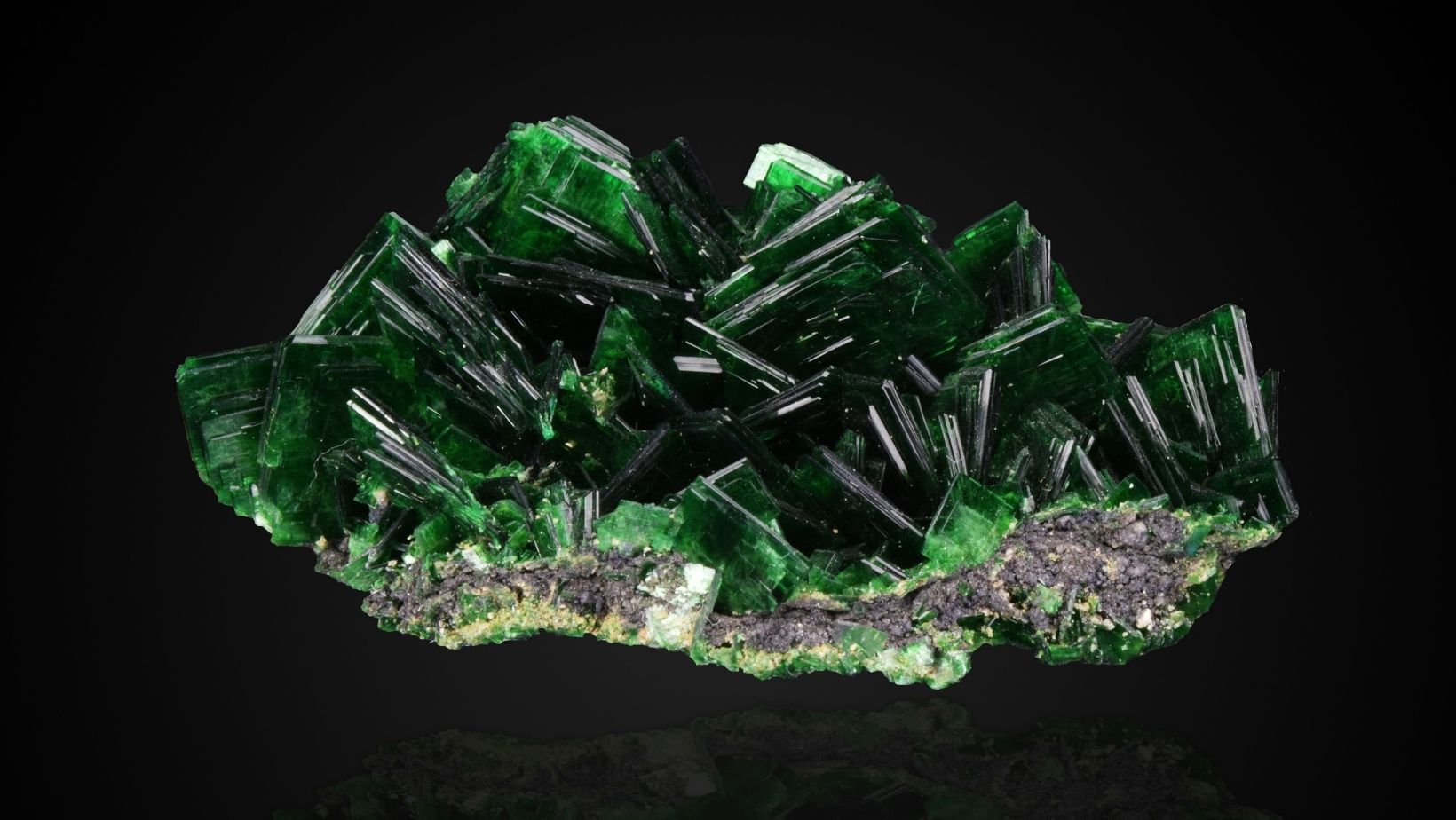
Both works are so popular (mostly due to the movies they inspired) that reputable jewelers have entire collections of emerald rings. For instance, you can buy a Diamondere emerald ring for yourself or a loved one who loves the fantastical world of Tolkien or Oz, to keep the magic alive in the real world.
3. Healing, Growth, and the Natural Order
In many fantasy systems, emeralds are used as conduits for life magic or as a way to tether a character to the natural world. You can see this in The Belgariad, by David Eddings, where the orb of Aldur is described in terms of its living, pulsing blue-green fire, acting as the heart of the world’s balance and natural law.
In The Wheel of Time by Robert Jordan, the Vora’s Sa’angreal and other ter’angreal often feature emeralds as focusing stones for the One Power, specifically for restoring health or the earth.
Then we have Tolkien’s Silmarillion. In this book, the emeralds of Finrod Felagund, given to Barahir, represent a bond of life and debt between Elves and Men, symbolizing a flourishing alliance in the face of death.
The Green Stone with Mystical Powers
Whether you wear it on your finger, around your neck, or in your imaginary adventures, the emerald’s vivid green is refreshing and inspiring. Keep it close to feel its power!