
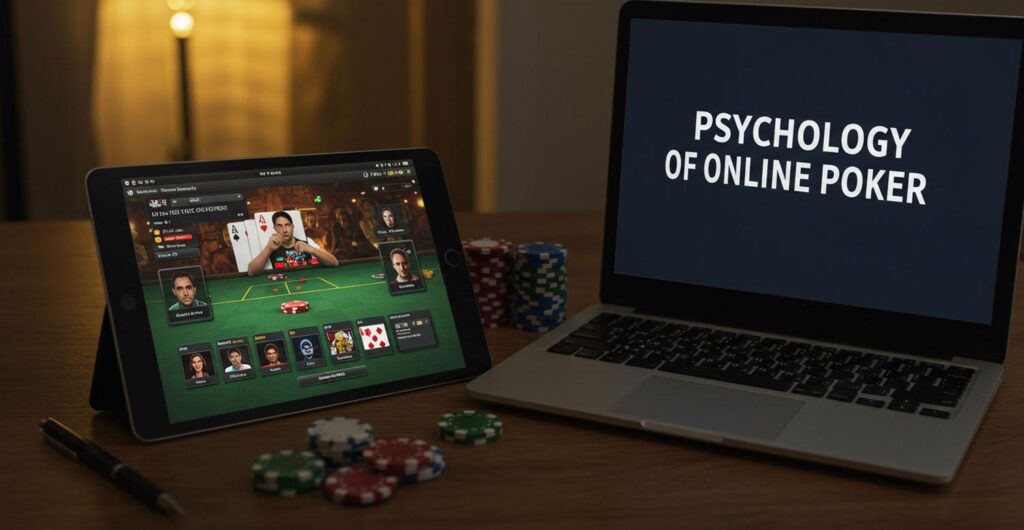
When it comes to online poker, many people think about cards, probabilities, and strategy. But what is often overlooked is that the very design of online poker sites directly influences player behavior in online poker. Buttons, color schemes, the placement of statistics, and even sound notifications all shape the atmosphere in which decisions are made.
Emotions manifest differently in online play than at a live table. There are no physical tells (gestures, facial expressions), but there are other signals: click speed, time taken to make a decision, willingness to take risks when the interface prompts action. That is why choosing a platform is not just a matter of convenience. It affects poker strategy, psychological stability, and even the chances of success — which is why comparing different online real money poker rooms https://www.pokerlistings.com/best-real-money-poker-sites before committing to one can make a real difference.
The purpose of this article is to explain how website design and interface features affect player psychology and how this can be used to play smarter and more calmly.
How Platform Design Affects Player Behavior
The design of an online platform is not only about aesthetics, but also a tool that can be used to influence poker decisions. Research on UI/UX poker effects shows that color accents, button placement, and sound effects change risk perception and decision-making speed.
For example, a bright and noticeable “Call” or “Raise” button prompts you to act faster than you would like. This can speed up the game, but at the same time increases the likelihood of impulsive mistakes. Conversely, a more restrained design helps the player maintain control and think about each hand.
Built-in hints and statistical panels play a big role in shaping the psychology of poker. Some platforms allow you to track hand history, opponent raise percentages, and even automatically calculate probabilities. Others are limited to minimal functions. In the first case, the player has an advantage for strategic decisions, in the second, the game becomes closer to classic “pure” poker, where everything depends on observation.
The influence of audiovisual stimuli should not be underestimated either. Pop-up notifications about bonuses or flashing banners can be distracting, and signals when the blinds are approaching increase emotional pressure. As a result, it becomes more difficult for the player to control themselves, and the platform indirectly dictates the style of play.
Common Psychological Traps in Online Poker
The psychology of online poker is full of traps that even experienced players fall into. Understanding these risks helps you prepare in advance and minimize mistakes.
Tilt
One of the most common problems is tilt, a state in which a player loses emotional control after a series of failures. In online poker, this is exacerbated by the speed of the game and the lack of pauses: hands follow each other in seconds, and the player has no time to “cool down.” As a result, decisions are made impulsively, leading to even greater losses.
The good news is that there are tilt management tools and methods that help control this state and return to calm, conscious play. Here’s what really works:
First, be aware of your own triggers. Identify the moments when you most often “burn out”: it could be a series of unsuccessful hands, the platform interface (sound, pop-up banners), fatigue, or external stress. Once you know your triggers, it will be easier to neutralize them.
It is helpful to use mental tools, such as:
- Conscious breathing or pauses in the game to calm down emotionally;
- Restructuring your thinking — consciously returning to strategic goals rather than emotions;
- A healthy lifestyle that includes sleep, nutrition, and physical activity. All of this increases your resilience to stress.
In addition, emotional management techniques work: mindfulness, meditation, and breathing practices help to quickly reduce tension and prevent a breakdown. Constant monitoring of your condition, such as tracking the frequency of mistakes or decisions outside of your strategy, helps you notice tilt at an early stage.
Insidious Bonuses
The second trap is blindly following promotions and bonuses. Many platforms deliberately encourage activity through pop-up offers: “Play three more tournaments and get a bonus.” Players often stop following their strategy and start chasing promotions, forgetting about bankroll management.
Loss of Focus Due to Information Overload
The third problem is information overload, especially when playing at several tables at once. Multi-tabling is attractive because of the potential earnings, but the brain quickly tires from having to keep track of dozens of decisions. As a result, attention is scattered and the player misses important signals: who bluffs often, who plays too tight.
All these pitfalls make one thing clear: the psychology of online poker is inextricably linked to the platform itself, and it is important to be able to recognize its influence.
Leveraging Behavioral Insights for Better Strategy
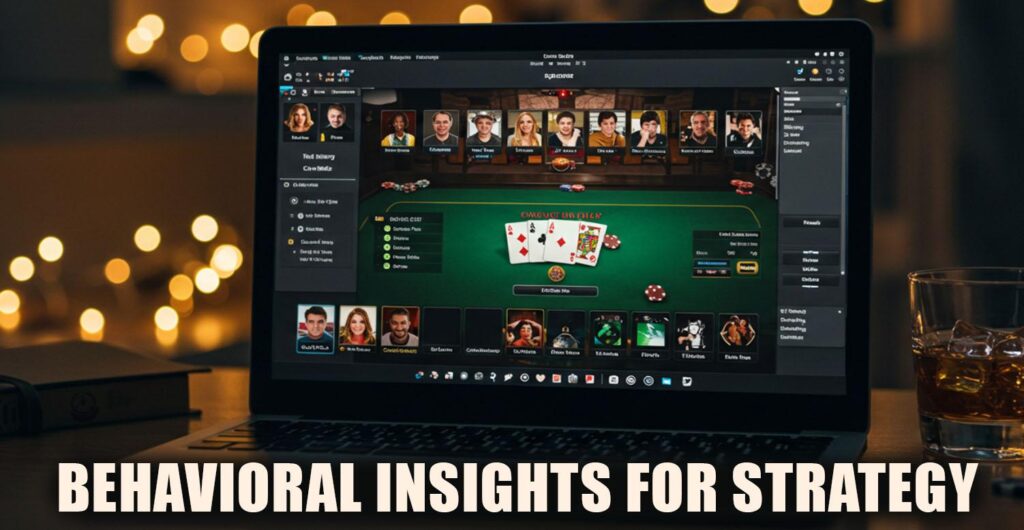
Awareness of psychological factors is not only a defense against mistakes, but also an opportunity to turn them into a strategic advantage.
It’s worth starting with an analysis of your own behavior. If, when using behavioral analytics poker, you notice that you make decisions too quickly or, conversely, hesitate too often, this is a signal that the platform’s interface is pushing you towards a certain style. Track your patterns, for example, in which situations you most often go all-in or fold your cards too quickly.
It is also useful to observe your opponents. In online poker, their tells are reaction time, bet size, and sequence of actions. For example, if a player thinks for a long time before betting and then makes a minimum raise, this may be a weakness. And if decisions are always instantaneous, then he is more likely to be playing according to a predetermined pattern.
To make better use of this knowledge, you can follow a few tips. They are applicable on any platform and help maintain psychological balance:
- Don’t rush into decisions: even if the interface encourages you to click, take a second to think;
- Filter out distractions: turn off pop-up notifications and sounds if they interfere with your concentration;
- Keep an eye on your opponents’ timing: delays and instant clicks often reveal their playing style.
- Use pauses: after a big loss, it’s better to take a break than to continue playing while tilted;
- Maintain control over your bankroll: don’t let promotions and bonuses dictate your decisions.
These simple steps will help you turn psychology from a weakness into the foundation of your strategy.
Conclusion – Playing Smarter on Online Poker Platforms
Online poker is not only about mathematics and strategy, but also about interacting with the platform. The interface, design, and additional elements create the atmosphere in which you play. Players who understand how the site affects their emotions and decisions gain a real advantage.
Choosing the right online poker sites is of strategic importance. Some sites provide more analytical tools and help you build a long-term strategy, while others overload the player with unnecessary stimuli and provoke mistakes. Therefore, approach the choice of platform as carefully as you would the choice of starting hands.
Ultimately, success in online poker comes not only from the cards in your hand, but also from your ability to control your emotions, notice the influence of the interface, and build a strategy based on psychology. The better you understand this, the closer you get to a game where not only your hand wins, but your mind as well.
Mostbet
Wednesday 12th of August 2026
Mostbet, an online platform covering sports betting, live betting, esports, casino games, slots, and live dealer entertainment. Visitors can explore details about registration, login, available sports, payment methods, mobile access, bonuses, and customer support. The website is designed to help users understand the platform and its available features before getting started.