
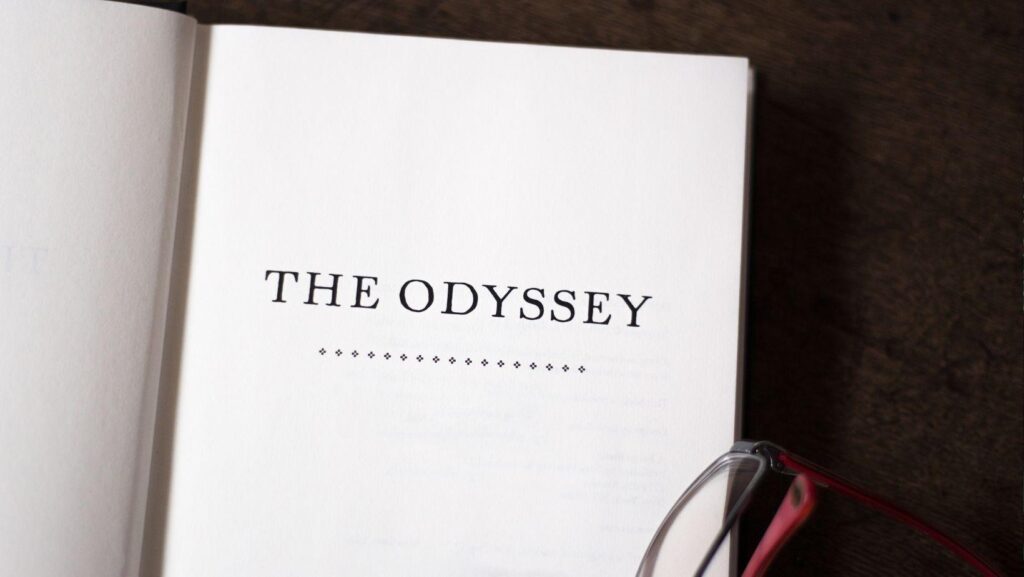
Bookshops and libraries have reported unprecedented demand for The Odyssey since Nolan’s adaptation was announced, and it appears to have spiked even more since its release.
Mythology is a Huge Theme Right Now
The success of The Odyssey reflects a much bigger resurgence in mythology as a whole. Netflix shows like KAOS have explored Greek legends with a modern lens, introducing new audiences to ancient stories while staying true to the original concept.
Heavy music has drawn inspiration from mythology and history. Swedish power metal band Sabaton has explored Rome’s historical moment with Crossing the Rubicon, which tells the story of Caesar’s march that changed the course of the Roman Republic.
Gaming has also embraced ancient Greece. Titles like Gates of Olympus, one of the online casino games featuring prominently on iGaming platforms, showcase gods like Zeus, using classic imagery to introduce modern audiences to timeless mythological realms.
Stephen Fry’s Mythos and Troy have been climbing through the rankings as of late, showing how the widespread trend isn’t just limited to The Odyssey. It’s spreading to other themes too, which is creating a domino effect across different books and genres.
Mythology is also popular right now because it covers a lot of relatable themes. Figures in Greek mythology are inherently flawed, whether it’s through jealousy, arrogance, impulsiveness, or pride. Flaws make the stories feel more human, and since the creation of these stories, many modern authors have gone as far as to retell them from newer perspectives.
Authors are now exploring the viewpoints of women or delving into overlooked figures. This helps to add more dimension to ancient tales, and at the same time, it helps to support the movement we are seeing right now.
That’s another reason why, 3,000 years after it was first told, The Odyssey is having no problems in finding a new audience, showing how timeless stories like this are, and how relatable they continue to be.
Bookshops and Libraries Have Reported Unprecedented Demand
Emily Wilson’s modern English translation is a standout, as it’s now sold over a million copies. Independent bookshops have also seen a notable, dramatic increase. Not only is this good for smaller bookshops, but it also highlights how physical copies are increasing in demand over digital eBooks, a trend that hasn’t been seen in quite some time.
Books Are Magic in Brooklyn sold a few copies a month before the spike in popularity, but in July, they sold 80 copies of Wilson’s translation, and this doesn’t include other copies that the store stocks. In the UK, editions have risen by 1,400%, and audiobook checkouts are up by 217%. Spotify has reported that audiobook searches have risen by 310%.
Renewed interest is having a knock-on effect across local retailers as well, as they are being encouraged to stock and display the classic, meaning it’s easier for people to find copies of it regardless of where they live. Some readers are also seeking out new formats of the tale, with Gareth Hinds’ graphic novel being one of the best-sellers at BookScan.