
Introduction
Character-themed gifts for book lovers are tangible merchandise—such as custom enamel pins, art cards, and bookmarks—designed to extend a novel’s fictional world into real-world touchpoints. Selecting the right character merchandise requires balancing three core factors: production cost efficiency, worldbuilding authenticity, and shipping practicality.
The guide provides a framework focused on the author for selecting character keepsakes that match the story, using pre-order bonuses to improve the book’s launch position, and increasing engagement among core readers.
I. What Character-Themed Gifts Do Readers Love Most?
As authors, when planning character merchandise for readers, we need to comprehensively evaluate the production costs, logistical difficulties, and visual impact of different categories in order to select the physical medium that best matches the story’s overall tone and aesthetic.
1. How Do Bookmarks, Art Prints, and Apparel Compare as Character Gifts?
Bookmarks are the most budget-friendly choice for authors looking to reach a broad audience; art cards perfectly showcase visual worldbuilding, while apparel carries high inventory and sizing risks.
- Paper stationery (bookmarks and bookplates): Extremely low production cost, lightweight, and very suitable for authors to bundle with new book orders effortlessly. Although the individual item has low premium and scarcity, it can ensure the widest coverage of the reader base.
- Visual arts (character art cards and maps): They visually showcase the aesthetics and worldbuilding of the novel, especially popular among readers of fantasy and romance genres. Its perceived value is higher than that of bookmarks, but it requires additional cardboard protection during shipping to prevent damage.
- Lifestyle apparel (T-shirts and canvas bags): Clothing featuring faction crests or quotes from characters is excellent as a kind of ‘mobile billboard’. Yet for independent authors, such clothing requires complicated size management, involves a large initial capital outlay, and has consistently high logistics costs.
A quick comparison of common character merchandise formats for indie authors:
|
Gift Format |
Production Cost |
Shipping Complexity |
Best Marketing Use Case |
|
Bookmarks & Bookplates |
Very Low |
Minimal (Standard Letter) |
Mass giveaway with all book orders |
|
Art Prints & Maps |
Low to Moderate |
Moderate (Rigid Envelopes) |
Worldbuilding perk for fantasy & romance |
|
Custom Lapel Pins |
Moderate |
Low (Padded Envelopes) |
Exclusive reward for ARC & Patreon |
|
Lifestyle Apparel |
High |
High (Sizing & Weight) |
Premium limited launch bundles |
2. What are the top-rated custom lapel pin shapes and why do people choose them?
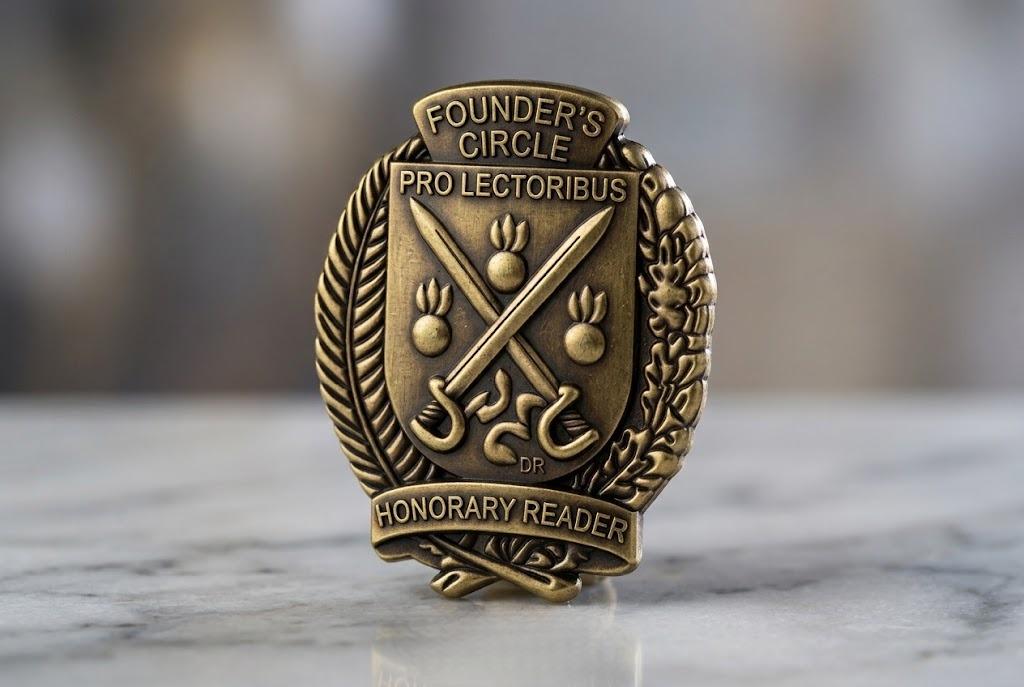
Geometric shapes like shields and circles are most commonly used to represent the established order or official knightly realms, while die-cut shapes have become the readers’ favorite collectible choice because they can accurately reproduce magical runes and unique weapons.
- Traditional geometric shapes (shield, circle, square): These shapes are structurally stable, serious, and orthodox, making them very suitable for use in the emblems of royal knightly realms, official magic associations, or ancient orders in novels. They can give readers a strong sense of order and historical depth.
- Die-Cut Shapes: These are cut along the contours of a character’s signature items, symbols, or weapons. Whether it’s the unique insignia of the rebels, the protagonist’s iconic unconventional weapon, or the mysterious magical runes, die-cut shapes give pins a striking three-dimensional presence. Working with experienced manufacturers like GSJJ allows authors to easily turn complex fictional runes or weapon silhouettes into crisp, high-detail metal crafts.
II. How Can Authors Use Character-Themed Gifts to Boost Book Sales?
As a self-published author, organically integrating physical gifts into the new book release and fan engagement process can boost pre-order rankings and foster long-term reader loyalty without undermining trust.
1. How Can Character Gifts Be Used as Pre-Order Incentives?
Setting the merchandise as a pre-sale exclusive gift can leverage scarcity to drive immediate pre-orders, helping the new book climb the launch charts.
- Launch Momentum: Publishing market analysts point out that concentrating 70% of early reader demand into launch week is the single most effective way to trigger retailer recommendation algorithms. Offering a $1-$2 physical keepsake during pre-orders consistently yields up to a 3x higher conversion rate than digital-only bonuses.
- Low barrier to entry: Readers only need to upload a screenshot of their pre-order receipt from any retailer to redeem it, without the need for the author to set up a complex system.
- Scarcity drive: Featuring “limited edition during the pre-sale period,” it can maximize the buyer’s fear of missing out, prompting hesitant readers to place their orders immediately.
2. How Can Custom Pins Strengthen Reader Loyalty for Indie Authors?
Exquisite and compact metal pins make ideal rewards for your community, providing a deep sense of exclusivity for superfans at a minimal cost.
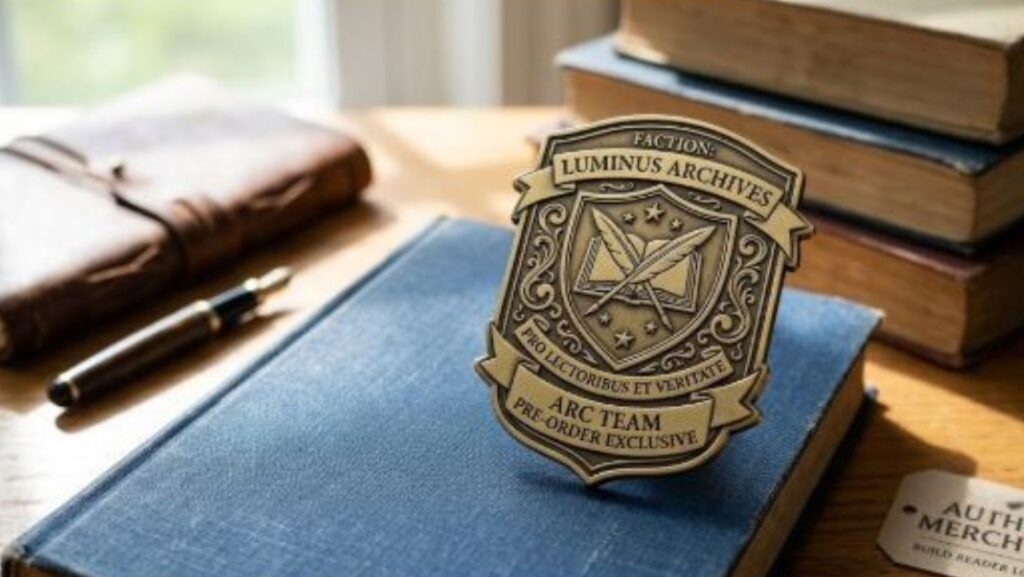
- Exclusive VIP Rewards: Instead of offering items for public sale, use custom metal pins as a badge of membership for your Advance Reader Copy (ARC) team and Patreon supporters—creating a tangible, VIP connection with your core fans.
- No inventory pressure: By leveraging services like GSJJ that support small-batch customization, you can create high-quality custom pins, ensuring product quality without tying up the author’s initial funds.
III. How Can Authors Balance Character Merch with Reader Trust?
When launching character merchandise, maintaining respect for the story’s worldbuilding and sincerity toward readers is key to preventing marketing from becoming **a hard sell** and maintaining the author’s credibility.
1. How Do You Ensure Your Character Gifts Feel Like Genuine Story Artifacts?
Focusing on in-universe symbols and authentic period materials transforms merchandise into immersive story artifacts rather than noisy promotional clutter.
- In-universe iconography: Feature faction emblems, secret runes, or character seals while strictly avoiding printed book titles, author names, or promotional URLs.
- Thematic material selection: Match tactile elements directly to your sub-genre, such as using antiqued brass for high fantasy or minimalist matte metal for science fiction.
- Prop-level authenticity: Craft items to look like tangible props pulled straight from the protagonist’s desk, creating an exclusive secret handshake for dedicated readers.
2. How Can Physical Keepsakes Enhance Story Immersion Without Distracting from the Book?
Keeping your writing as the main focus ensures physical keepsakes act as subtle reading companions rather than overwhelming distractions from the story.
- Core writing priority: Channel 90% of your creative energy into drafting great books, treating merchandise strictly as a low-maintenance, supplementary project.
- Reading-centered utility: Choose simple items that serve the actual reading experience—like atmospheric page-markers or reading accessories—rather than noisy promotional novelties.
- Secondary enhancement: Position physical gifts as optional perks for fans, ensuring your literary work always remains the central driver of your author brand.
IV. FAQs
1. How Should Authors Handle International Shipping Costs for Physical Gifts?
Authors should choose lightweight and thin items (for example, metal pins or flat bookmarks) so that they can be put directly into standard paper envelopes and posted at the standard postage rates. For international readers who face very high postage costs, a region-specific rewards strategy should be used, providing exclusive digital bonuses such as additional chapters or high-definition wallpapers as an alternative form of compensation to readers in overseas areas.
2. How Much Budget Should Indie Authors Allocate for Character Gifts?
It is recommended to strictly control the merchandise budget within 5% to 10% of the expected initial profit of the new book, positioning it as a marketing cost rather than an independent profit-generating project. During the launch planning stage, authors should utilize platforms like GSJJ that provide instant online quoting and free artwork proofs. This allows you to accurately calculate per-unit costs and stay strictly within your 5% to 10% marketing budget before placing an order.
V. Conclusion
Carefully designed character merchandise is by no means just a marketing gimmick; it is a physical bridge connecting the fictional world with real emotions. From cleverly using pre-sale limited edition gift packs to boost the initial impact of a new book, to leveraging exclusive metal tokens to deeply engage the ARC team and core community, these physical touchpoints can bring irreplaceable community cohesion to independent authors. As long as you always prioritize respecting the story’s worldbuilding and maintaining reader trust, high-quality merchandise can become the most powerful booster for your author brand—ensuring that your story not only stays on the pages but also integrates into readers’ lives for the long term.