
Dragons, ancient gods, mysterious kingdoms, and daring adventures were keeping readers entertained long before they appeared on a screen
Walk into the fantasy section of a bookstore, and you already know what kinds of amazing worlds you might find.
There could be a kingdom full of dragons. A forest nobody sensible should enter alone. An ancient civilization hiding something valuable. Perhaps a hero is about to discover that the ordinary object they’ve been carrying for 200 pages is extremely unordinary. Readers love these worlds. We return to mythology, fantasy, adventure, and mystery again and again, even when the characters and plots change completely.
Those themes have traveled far beyond bookshelves, too. They appear in movies, TV shows, video games, and slot games, where a recognizable theme can establish the mood before anything has even happened.
So, how does an idea that works across hundreds of pages find its way onto a set of reels?
Some stories are bigger than one format
Storytelling has always borrowed from a huge pool of shared ideas.
Mythology gave writers gods, monsters, magical objects, and impossible quests. Adventure fiction took readers across oceans, through jungles, and toward lost places. Fantasy writers created entirely new worlds while drawing inspiration from folklore, legends, and centuries-old storytelling traditions.
None of those ideas belong exclusively to books.
A dragon can appear in a novel, movie, or game, and immediately bring certain associations with it. The same goes for treasure maps, ancient temples, enchanted forests, and mythological figures. We understand the basic language of these themes because stories have taught it to us.
That familiarity becomes particularly useful when entertainment has less time to establish its world.
From a 400-page world to five reels
A novelist can spend entire chapters establishing a kingdom. Slot games have considerably less room, so their themes have to work quickly. Someone who likes to play digital slots might find games inspired by fantasy, mythology, adventure, animals, or historical imagery particularly engaging. Instead of paragraphs of description, the theme appears through symbols, backgrounds, music, animation, and the overall design of the reels. A mythological game of slots might use temples and legendary figures, while a fantasy-inspired title could feature magical objects, creatures, or imagined landscapes.
People who play online slots can therefore browse games partly according to the worlds and subjects that interest them, much as readers wander toward particular shelves in a bookstore. The experience is different, of course, but themes still help distinguish one title from another.
This also explains why some subjects keep appearing. They already come with a visual language people recognize.
Mythology has an enormous head start
If you’re searching for material packed with drama, mythology has several thousand years’ worth ready to go.
Myths contain heroes, monsters, gods, battles, transformations, and quests. Their influence runs throughout literature, from direct retellings to modern stories that borrow individual characters or ideas.
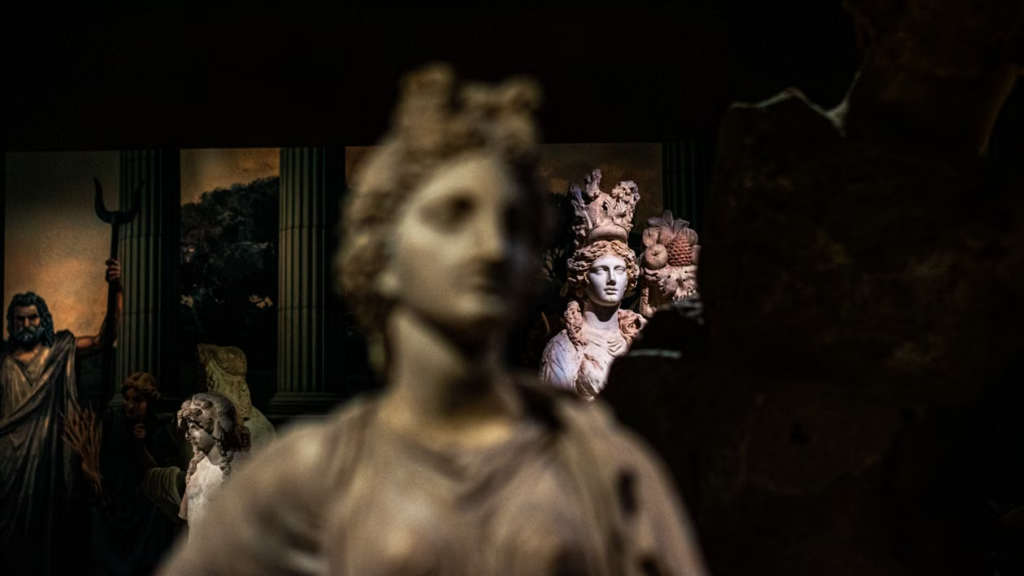
Take Greek mythology. Medusa, Zeus, Hades, and the Minotaur can be recognized without an entire chapter explaining who they are. Norse mythology offers another huge collection of characters, creatures, and symbols. Egyptian mythology has its own distinctive visual tradition.
Books continue reinventing these stories for new generations. Madeline Miller’s Circe turns a figure from Greek mythology into the center of her own novel, while Neil Gaiman’s Norse Mythology retells stories of Odin, Thor, Loki, and other figures for contemporary readers.
For visual entertainment, mythology also offers something extremely useful – instantly identifiable imagery. Gods, temples, lightning, hammers, serpents, and legendary creatures can communicate the theme in seconds.
Adventure was made to travel
Adventure stories have been sending fictional characters into trouble for centuries.
They also come with some wonderfully recognizable ingredients. Maps. Ships. Distant landscapes. Hidden objects. Unexplored places. A protagonist making the questionable decision to open a door that very obviously should remain closed.
Robert Louis Stevenson’s Treasure Island helped cement some of the imagery we still associate with pirate adventures. Jules Verne sent readers around the world, beneath the sea, and toward the center of the Earth.
Those ideas continued traveling.
Modern movies and games regularly return to exploration, discovery, and treasure-hunting themes because there are countless ways to reinterpret them. Slot design is another place where adventure imagery can appear, using recognizable objects and settings to establish a game’s identity without requiring a lengthy introduction.
The tiny details do a lot of work
Think about the last fantasy novel you read. Chances are, the author didn’t repeatedly announce that you were in a fantasy world. The clues were built into everything around the characters – the landscape, clothing, objects, names, creatures, and customs.
Visual entertainment has its own version of those clues. Themed slot collections on platforms such as mBit Casino can contain very different visual worlds within the same game format. One title may lean into mythology while another uses animals, fantasy imagery, or an adventure setting. Backgrounds, symbols, and sound help communicate those differences quickly.
Great themes refuse to stay on the bookshelf
Stories are remarkably good travelers. An ancient myth can survive for thousands of years, become a novel, inspire a movie, and appear in a game while remaining recognizable. Fantasy keeps inventing new kingdoms from familiar ingredients. Adventure continues finding unexplored places to send us.
For readers, spotting those connections can make familiar themes even more interesting. The next time you encounter a dragon, ancient god, mysterious map, or legendary treasure somewhere outside a book, think about how far that idea may already have traveled.
Then, go back to the bookshelf. There’s probably another version of the story waiting there.