

Books don’t recommend destinations outright. They suggest climates of thought. A reader doesn’t close a novel and immediately think of hotels or itineraries; they think of atmosphere — a certain light at dusk, a rhythm of speech, a landscape that shapes decisions rather than decorates them.
That’s why literary travel tends to drift toward places where movement is slow and layered. Not everywhere on the map supports that kind of reading with your feet.
Some continents do it naturally. Their geography already behaves like narrative.
Europe: Stories That Follow the Water
Europe is known through its great rivers and the journeys they enable. They have carried the continent’s history and continue to shape how it is experienced today, favoring slowness, continuity, and a certain acceptance that things reveal themselves over time.
European literature doesn’t simply reference rivers; it relies on them. Many of its most recognizable works assume that movement happens by water rather than by road, with the river acting as the quiet organizer of plot, memory, and power.
You see this clearly in Claudio Magris’ Danube, a book that is less travelogue than intellectual map. Magris treats the river as a living archive, moving from Germany to the Black Sea while carrying fragments of philosophy, war, music, and empire. The book’s structure mirrors the river itself — digressive, layered, resistant to borders. Traveling the Danube by cruise produces the same sensation.
You don’t feel like you’re ticking off countries. You feel like you’re passing through chapters of a single, long argument about Europe.
Joseph Roth’s Radetzky March sharpens this further. His Austro-Hungarian world depends on the Danube as a symbol of order slowly losing its authority. Vienna in Roth’s writing feels polished but fatigued, ceremonial but anxious. Arriving there by river makes that mood legible. The city doesn’t announce itself; it receives you.
The restraint Roth describes isn’t literary exaggeration — it’s architectural, spatial, and still visible.
The Danube: Memory as a Current
The Danube appears in literature as a force that remembers longer than nations do. Elias Canetti, born in what is now Bulgaria, wrote about Central Europe as a place defined by crossings — linguistic, ethnic, ideological. The river connects those crossings physically. A Danube cruise recreates the mental geography of writers who never thought in terms of isolated capitals.
Budapest, in particular, gains depth through literature. Sándor Márai’s novels are haunted by the city’s divided soul, by lives shaped by historical interruption rather than personal failure. From the river, Buda and Pest face each other in a way that makes that tension visible without explanation. The water doesn’t resolve the divide. It holds it.
Further downstream, the Danube passes through towns that rarely appear in glossy narratives but surface repeatedly in Central European fiction — places where the past hasn’t been curated. These are settings where memory is not monumental but domestic, which is exactly how writers treated them.
The Seine: Observation Over Spectacle
If the Danube carries history, the Seine carries attention. French literature trains readers to notice patterns rather than events, and the river supports that habit.
Victor Hugo understood this instinctively. In Les Misérables, the Seine is not romanticized; it’s functional, dark, sometimes threatening. It absorbs secrets and returns consequences. Approaching Paris by river places you inside Hugo’s moral geography, where the city reveals itself through layers rather than landmarks.
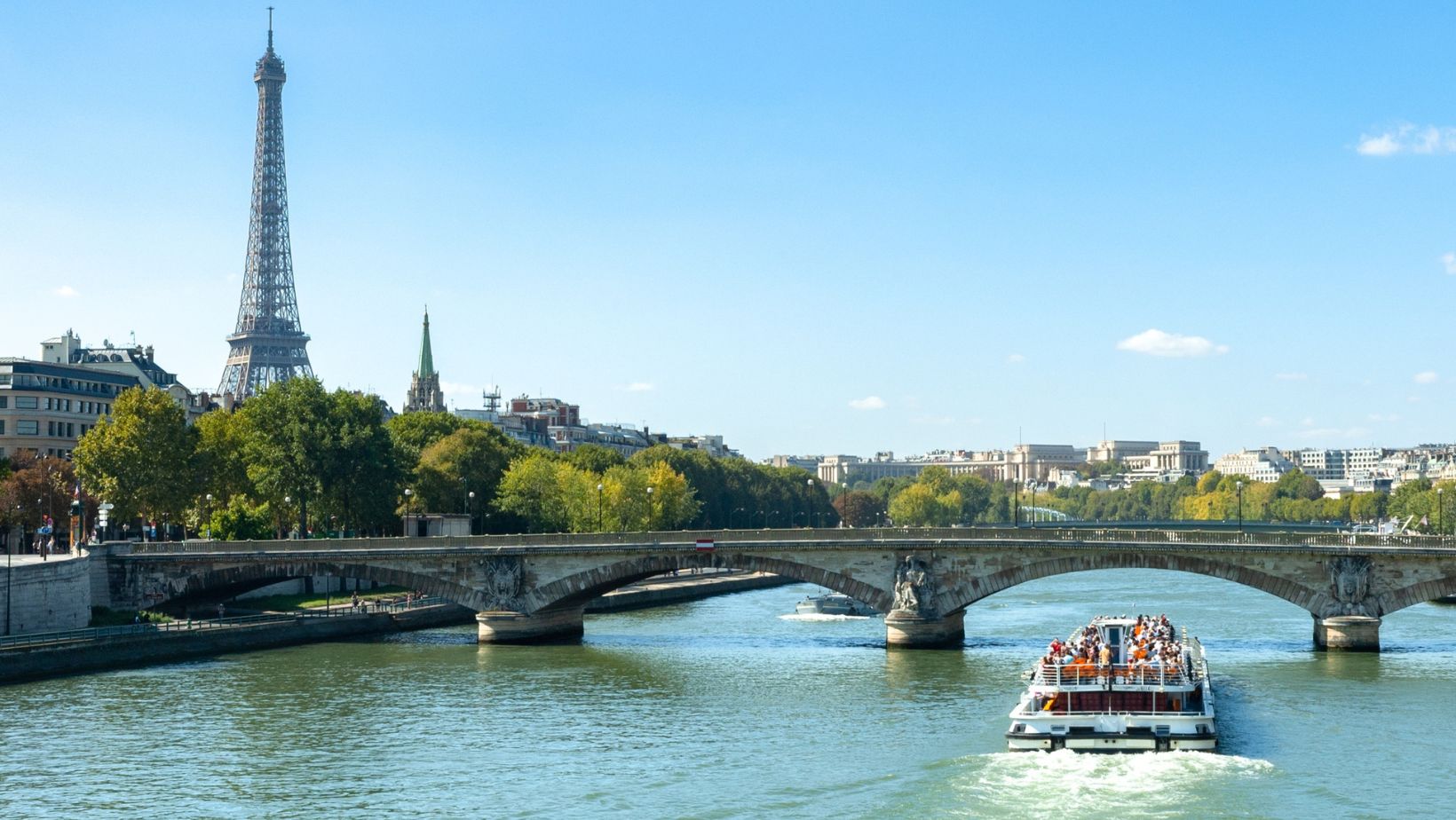
Balzac’s Paris operates similarly. His characters walk endlessly, cross bridges without remark, and treat neighborhoods as psychological states. Entering Paris via the Seine avoids the theatrical arrival modern travel encourages. You don’t “see Paris.” You enter its bloodstream.
Normandy extends this logic. In Madame Bovary, Flaubert’s landscapes are not quaint; they’re oppressive in their ordinariness. Traveling from Paris toward Rouen and Honfleur by river restores the continuity Flaubert assumed. These towns were never isolated backwaters. They were connected to Paris economically, socially, and imaginatively — a fact river travel makes obvious.
Asia: Landscapes Written in Silence
Asian literary traditions often rely on absence rather than declaration. What matters is not what is shown, but what is withheld. Travel shaped by these texts becomes an exercise in patience rather than discovery.
Japan: The Weight of Small Moments
Few works illustrate this better than The Tale of Genji. Written over a thousand years ago, it treats setting as emotional context rather than scenery. Seasons shift, rooms change, rivers appear and disappear, all without dramatic emphasis. The world feels intimate because it’s observed repeatedly, not intensely.
That same sensibility runs through Yasunari Kawabata’s Snow Country, where landscape reflects inner isolation rather than external beauty. Traveling through rural Japan today — especially mountain towns or quiet river valleys — reveals how little has changed in this regard. The environment still insists on modesty.
Tokyo’s literary identity is often misunderstood. Haruki Murakami’s city is not neon spectacle; it’s fragmented, interior, filled with anonymous cafés, empty streets, and late-night walks. The Sumida River appears not as a destination but as a quiet divider, a place where characters pause without explanation. Seeing Tokyo from its waterways or walking alongside them reveals the city Murakami actually writes about — subdued, introspective, strangely tender.
India: Stories That Spill Across Geography
Indian literature rarely stays still. Epics like The Mahabharata unfold across forests, rivers, cities, and battlefields, treating geography as moral terrain. Movement is not optional; it’s destiny.
Modern writers echo this scale. In R.K. Narayan’s work, small towns become entire universes, shaped by nearby rivers that dictate rhythm and belief. The Ganges, in particular, appears across centuries of writing as something unavoidable — not sacred decoration, but existential presence.
V.S. Naipaul, despite his complicated relationship with India, captured this overwhelming quality precisely. His journeys through the country are marked by excess: sound, population, contradiction. Traveling through cities like Varanasi with literature in mind reveals why. The river doesn’t frame the city. It consumes it. Boats, rituals, commerce, and death all occur simultaneously. The poetry comes from coexistence, not harmony.
South America: Where Myth and Reality Refuse Separation
South American literature often reads like testimony delivered through metaphor. Landscapes feel unreal because they’ve absorbed history faster than language can process it.
Colombia: Heat, Memory, and Circular Time
One Hundred Years of Solitude is known even to people who haven’t read it. What’s often missed is how geographic it is. Macondo is not fantasy terrain; it’s river-bound, humid, isolated in ways that shape consciousness. The Magdalena River exists beneath the novel’s magic, organizing trade, movement, and memory.
Traveling through Colombia’s river regions reveals how naturally this narrative style emerges. Conversations loop. Stories repeat with slight variation. Time feels less linear. Heat slows cause-and-effect. García Márquez didn’t invent magical realism to escape reality; he used it because realism alone wasn’t precise enough.
Argentina: Cities Written Like Essays
Argentine literature, especially Borges, treats place as an intellectual problem. Buenos Aires is not described so much as examined. Streets become metaphors. Libraries replace monuments.
In Borges’ stories, the city is built from references — imagined pasts layered over real corners. Walking Buenos Aires with this in mind turns ordinary neighborhoods into conceptual spaces. Cafés feel provisional, meant for thinking rather than lingering.
The Río de la Plata reinforces this tone. It’s enormous but understated, refusing drama. It mirrors the literature’s skepticism toward grandeur. The river doesn’t insist on meaning. It allows it.
Why Poetic Travel Crosses Continents
The destinations that feel most like books share one trait: they don’t demand attention. They reward it. Rivers help. Silence helps. So does cultural comfort with ambiguity.
Reading prepares you for these places by lowering your expectations of spectacle. In return, travel deepens the text, turning description into recognition.
Europe offers narrative continuity through water. Asia offers emotional precision through restraint. South America offers myth woven into daily life. None of this is accidental. Writers noticed it first. Readers follow later.
Literary travel doesn’t end with arrival. It begins there, somewhere between the page and the place, when the world starts behaving the way the book suggested it always did.