
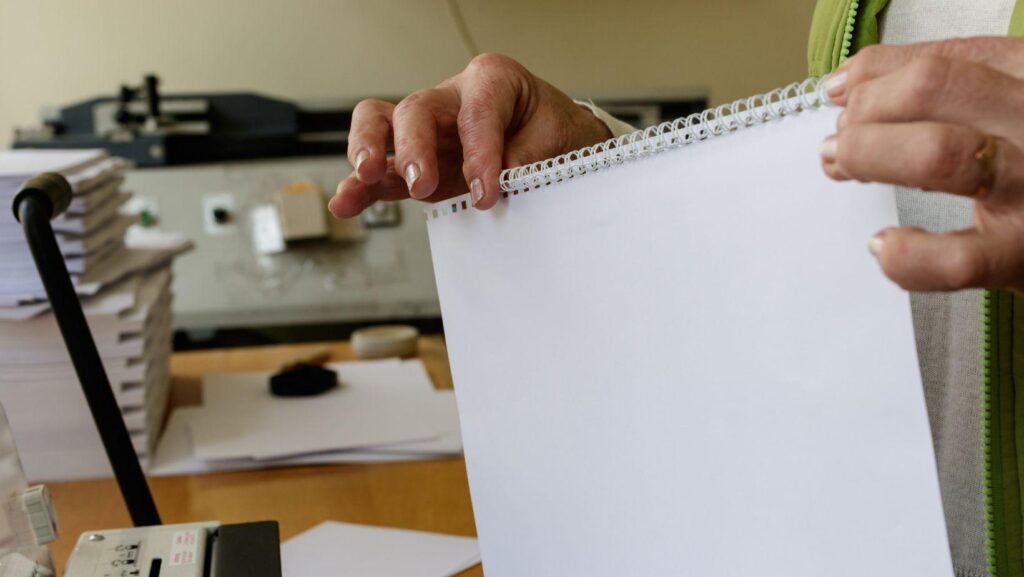
Book binding is the process of joining printed or blank pages into a booklet or book, using folds, stitching, adhesive, or a combination of methods, then attaching a flexible or rigid cover suited to the book’s purpose.
A thin zine can use a folded stitch; a journal or keepsake book needs a stronger sewn text block and hard cover. With a few basic tools, you can make one at home.
Types of Book Binding: How the Main Methods Differ
Book binding types describe how pages are gathered and attached to a cover: folded booklets are stitched at the spine, loose sheets can be side-sewn, paperbacks are glued, and hardcovers use a separate case.
|
Binding method |
How it holds the pages |
Works well for |
|
Pamphlet stitch |
A folded section is sewn through its spine fold. |
Zines and slim booklets. |
|
Japanese stab binding |
Loose sheets are sewn together near one edge. |
Notebooks and books made from single sheets. |
|
Perfect binding |
Loose pages are glued along the spine. |
Paperback-style books. |
|
Case binding |
Sewn sections are attached to a rigid cover. |
Hardcovers and keepsake books. |
|
Coptic binding |
Sewn sections are linked across an exposed spine. |
Journals that need to open flat. |
The pamphlet stitch is a straightforward first sewing project; case and Coptic bindings take more steps. A handmade game journal can use any of these methods and a King Johnnie-themed cover.
Which Book Binding Method Should a Beginner Try First?
For a first project, start with the pamphlet stitch: it uses one folded section, a few holes, a needle, and one length of thread, so you can practise folding and sewing without glue or a press.
- Fold a few sheets together and place them inside a folded cover.
- Punch three evenly spaced holes along the spine fold.
- Sew through the holes and tie the thread inside the booklet.
Try the stitch on scrap paper first. Once the pages sit evenly and the thread holds them without puckering, move on to a hardcover.
Book Binding Tools: What You Need to Make a Book at Home
For a basic hand-bound book, you need paper, cover board, a needle, thread, an awl, glue, a ruler, and a sharp knife; a bone folder and book press help make neater folds and a flatter cover but are optional.
Start with these essentials:
- Paper and cover board for the pages and rigid covers.
- Bookbinding needle and thread to sew the folded sections.
- Awl to pierce sewing holes along the folds.
- Flexible bookbinding glue, ruler, pencil, and craft knife to assemble and trim the cover.
A bone folder makes crisp creases; a book press or two flat boards with clamps keeps the book compressed while the glue dries. A bookmaking kit can save time when it includes the awl, needle, and thread, but check the contents before buying.
Folding Paper for Bookbinding: Prepare the Signatures
A signature is a small group of sheets folded together; sew several signatures through their folds to make the text block, keeping the paper grain parallel to the spine so the pages turn cleanly.
Hard Cover Binding: How to Make a Hardcover Book at Home
To make a hardcover at home, sew folded signatures into a text block, reinforce its spine, build a separate case from cover boards and cloth or paper, then attach the case by gluing down the endpapers.
Arrange the signatures
Stack the folded sections in page order, with the folded edges aligned. Add a folded sheet at the front and back for the endpapers; these will connect the text block to the cover.
Mark and pierce the sewing stations
Open each signature to its centre fold. Use a ruler and template to mark three or five evenly spaced holes, then pierce through the fold with an awl. Keep the holes on the crease so the pages turn without tearing.
Sew the signatures together
Thread a bookbinding needle with waxed thread. Sew through each signature in turn, linking it to the previous one at the spine. Keep the thread snug enough to hold the sections together, but not so tight that it puckers the paper.
Reinforce the spine
Press the sewn text block between flat boards. Brush a thin coat of flexible bookbinding glue along the spine and attach a strip of thin cotton cloth, leaving extra cloth at each side. Let the glue dry before making the cover.
Make the hardcover case
Cut two cover boards slightly larger than the text block. Leave a narrow gap between the boards and a thinner strip of board for the spine; this gap forms the hinges. Glue the boards and spine strip onto book cloth or sturdy cover paper, then fold the material over the edges.
Attach the case
Apply glue to the outside of each endpaper and press it against the inside of a cover board. Keep glue out of the hinge gaps. Close the book between clean sheets of scrap paper and leave it pressed until the adhesive is fully dry.
Marbled Paper Cover Ideas for a DIY Book
Decorate the cover after the glue has dried so paper, cloth, or marbled paper stays in place, and keep the hinge area clear so the finished book opens smoothly without stressing the spine.
- Bullet journal: Plan the index, numbered pages, and monthly spreads before printing or folding. This makes it easier to use the finished book for bullet journalling.
- Flower press journal: Leave space to record the names and dates of fully dried flowers beside them.
- Personal notebook: Add a title label, pocket, or ribbon marker; avoid thick decorations along the spine.
Bookbinding Troubleshooting: Fix Common DIY Mistakes
Most first bookbinding problems come from misaligned signatures, uneven sewing tension, or glue in the hinge; check each stage before adding another coat or trimming the book to fix the finish.
FAQ
Can you bind a book without a press?
Yes. Place the glued book between two flat boards and add evenly distributed weight while it dries. A press gives steadier pressure, but a small notebook can be made without one.
What does a bookbinder or book binder do?
A bookbinder assembles pages and covers by hand or machine. A “book binder” can also refer to equipment that clamps or punches pages, so check the product description before buying.
Where can you find bookbinding supplies in Melbourne?
Look for bookbinding supplies in Melbourne at specialist book-arts suppliers, paper shops, and larger craft stores. Check stock before visiting, and confirm that the paper, board, thread, and glue suit your project.
Can you make a flower press book with this binding method?
You can bind a journal for recording pressed flowers, but press the flowers separately and let them dry fully before adding them. Moisture trapped in a bound book can stain or damage the pages.
What should a book making kit include?
A beginner book making kit should include a bookbinding needle, thread, an awl, and a bone folder. Check whether paper, cover board, glue, and instructions are included; kits vary in contents.