
Every author knows the moment: the manuscript is finished, the cover is designed, the book is live — and now comes the part nobody warns you about. Marketing. For traditionally published authors with a publicity team behind them, that’s someone else’s job. For the growing majority who are self-published, hybrid, or working with a small press, it’s one more thing added to an already overflowing plate, usually with a marketing budget that rounds down to zero.
Book trailers have always been one of the most effective tools an author can use — readers respond to motion and voice in a way a static cover image or a blurb never quite matches. The problem has always been production. A professionally made book trailer used to cost anywhere from a few hundred to several thousand dollars, which put it out of reach for most authors publishing their second or third book without a bestseller’s advance behind them.
Why Book Trailers Have Been Out of Reach for Most Authors
Traditional trailer production means hiring a videographer, sometimes actors, often a location, and always an editor to stitch it all together into something under 90 seconds that actually captures a book’s tone. For a debut novelist or a midlist author already covering their own editing and cover design costs, that expense rarely makes it past the “someday” list, even though authors and publicists alike know trailers move copies — especially on platforms like TikTok and Instagram, where BookTok has proven that short video is one of the strongest discovery engines in publishing today.
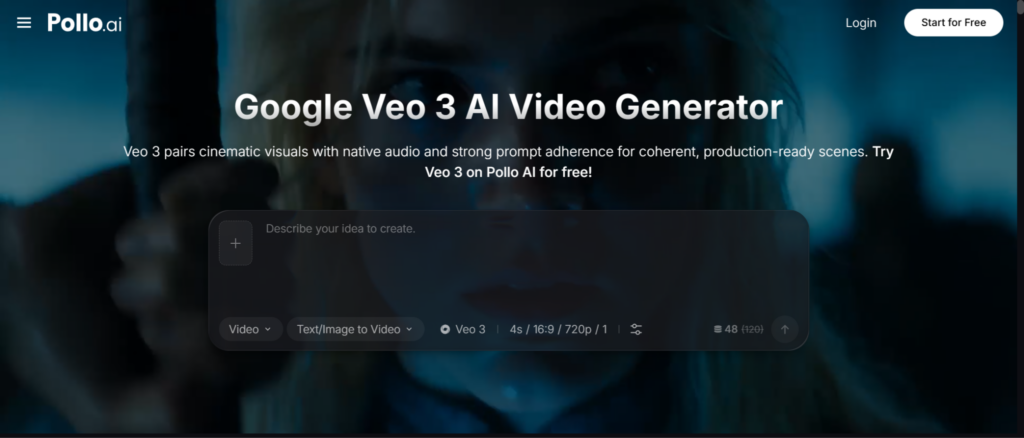
This is where a newer generation of AI video tools is starting to change the math. Veo 3, accessible through Pollo AI, is a video generation model built to produce cinematic, high-quality motion from a written scene description or a reference image. An author can describe a key moment from their book — a stormy coastline, a candlelit study, a chase through a crowded market — and generate footage that captures the mood of the story without booking a single location or actor. What used to require a production budget now fits into an afternoon at a laptop.
What This Actually Looks Like for a Book Launch
The practical applications go well beyond a single polished trailer. Once an author starts thinking in terms of short, generated clips, a few recurring uses show up quickly:
Full-length book trailers
A 30 to 90 second trailer built around the book’s central conflict or setting, styled to match the tone of the genre — moody and atmospheric for literary fiction, high-energy for thrillers, warm and inviting for romance.
BookTok and Reels teasers
Short, punchy clips built for vertical video platforms, where a striking visual moment paired with a line from the book often outperforms a longer, more traditional trailer.
Series and world-building content
Authors with a fantasy or sci-fi series can generate atmospheric footage of their world — a city skyline, a forest, a battle scene — to use across multiple books in a series, building visual consistency for readers following the story over time.
Pre-order and launch campaigns
A short countdown-style video or a “coming soon” teaser gives authors something visual to post in the weeks before release, when engagement matters most for early sales momentum.
None of this replaces a strong hook or compelling writing — the book still has to deliver. What it removes is the production barrier that’s kept most authors from ever trying video marketing at all.
Designing Covers and Graphics with Craiyon AI
A trailer rarely stands alone in a launch campaign. Authors also need supporting graphics — a striking thumbnail for the trailer itself, quote graphics for social media, a cover reveal image, or promotional banners for a newsletter and website. Producing those separately usually means opening a design tool with a learning curve of its own, on top of everything else already competing for an author’s time.
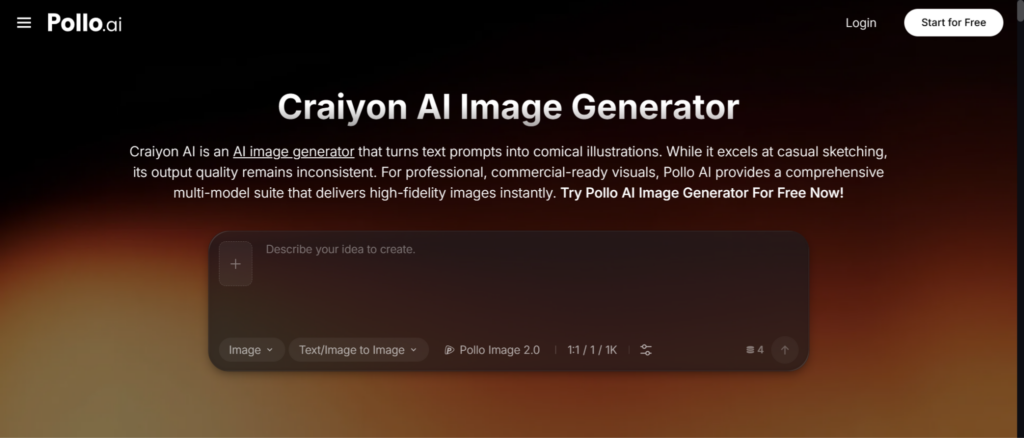
Pollo AI also gives authors access to Craiyon AI, an image generation tool that fits naturally into the same workflow. After generating a trailer with Veo 3, an author can use Craiyon AI to create a matching thumbnail, quote card, or promotional graphic, keeping the visual style consistent across the trailer, social posts, and website — all without leaving the same platform or juggling a second subscription.
A Simple Workflow for Launch Season
Start by identifying the single most evocative scene or image from the book — the moment that captures its tone best. Write a short, specific description of that scene and generate a few variations with Veo 3, choosing the one that best matches the book’s mood. Pair it with a matching thumbnail or quote graphic made in Craiyon AI, then build out a short version for social platforms and a longer version for the book’s landing page or Amazon listing. Treated as a standard step before every launch, rather than a special project reserved for a lead title, this becomes a repeatable part of an author’s release process rather than a one-off experiment.
What This Means for Authors Going Forward
Publishing has always rewarded authors who can market as well as they write, and that reality isn’t changing. What’s changing is who gets to compete on production value. A trailer that once required a budget only a lead title could justify is now within reach for a debut novelist working alone at a kitchen table. For authors weighing where to spend limited launch-season time and money, tools like Veo 3 and Craiyon AI, both available through Pollo AI, are worth testing before the next release — video is only becoming more central to how readers discover their next book, and the barrier to trying it has never been lower.