

Poker has come a long way in recent decades: from the world of smoky backrooms, it has evolved into a cultural phenomenon shaped by international tournaments, online platforms, and social media content creators. In this transformation, the role of casinos has not only persisted but has also taken on new meaning. Today, the casino is no longer merely a venue where cards are dealt; it is a central hub of poker culture where the game, prestige, community, and entertainment converge.
To understand modern poker culture, it is worth examining how casinos shape players’ habits, the tournament system, poker’s social perception, and future trends. Casinos do not merely cater to interest in poker; they actively shape it.
The Casino as the Traditional Home of Poker
Throughout poker’s history, casinos have always enjoyed a special status. These venues provided a structured, regulated environment in which the game could develop thoughtfully. Fixed rules, professional staff, the table layout, and the high standard of tournament organization have all contributed to making poker more than just a simple card game.
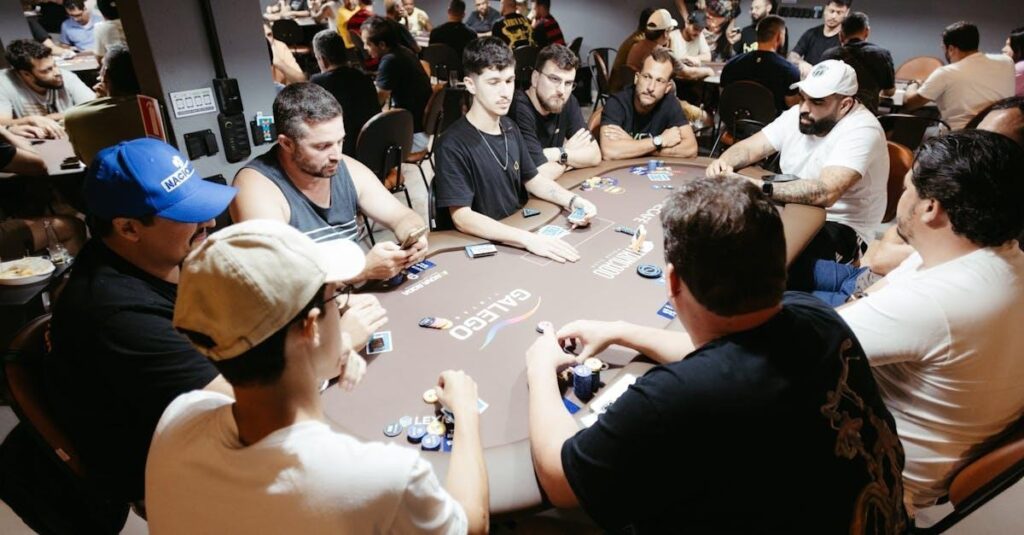
Casinos create an atmosphere that elevates the significance of the game. The lighting, the setting, the protocol, and the tension of live play are all part of an experience that the online space struggles to fully replicate. For many players, it is precisely this milieu that captures the true essence of poker: the physical presence, the reading of body language, and the psychological battle that truly comes to life at live tables.
The Social Side of Modern Poker Culture
Community is one of the most important elements of today’s poker culture. Casinos play a key role in this as well, serving as a meeting place for everyone from novice players to seasoned pros. A well-organized poker room is not just a place to play, but also an environment where connections are made, experiences are shared, and long-term rivalries or friendships often form.
Cash games, satellite tournaments, and major casino-organized tournaments enhance this community experience. A local tournament can be just as much of a gateway into the world of poker as a major international event. Regular attendance, familiar faces, and the unique dynamics of the table all contribute to poker functioning as a subculture.
Tournament Structure and Professionalization
One of the defining features of modern poker culture is professionalization. Today, an increasing number of players view poker as a serious intellectual challenge, and even as a career path. Casinos play a key role in this process, as they provide high-quality, competitive environments where players can develop and test their skills.
Structured tournament series, guaranteed prize pools, live broadcasts, and leaderboards have all contributed to giving poker a more athletic, professional image. Casinos provide not only the organizational infrastructure but also credibility. A tournament held at a well-known casino lends greater prestige to the game and boosts participants’ motivation.
Connecting the Online and Offline Worlds
In the digital age, poker has long ceased to be exclusively a live game. Thanks to online platforms, the game has become faster, more accessible, and much more widely known. At the same time, casinos have not lost their significance; rather, they have taken on a new role: they serve as a bridge between the online and offline poker experiences.
Many players learn, practice, and analyze hand histories online, then put their skills to the test in a live casino setting. This duality has created a new kind of poker culture where technical knowledge and personal presence matter equally. Brands and platforms that understand the needs of both worlds find themselves in a particularly strong position; a good example is Wincraft Casino, which offers a digital experience tailored to modern players’ expectations.
The Impact of Casinos on Poker’s Image
Society’s perception of poker has changed significantly. While many previously viewed it solely as a game of chance, today an increasing number of people recognize its strategic, psychological, and mathematical aspects. Casinos have played a key role in this shift by establishing a professional framework for the game.
High-quality events, regulated operations, an emphasis on fair play, and communication about responsible gaming all help present poker to the public in a more civilized and accepted form. Thus, the casino remains both a venue for entertainment and a stage for serious competition.
Entertainment, Experience, and Lifestyle
Modern poker culture is not just about the game, but also about a unique lifestyle. Casinos reinforce this lifestyle by often embedding poker within a complex entertainment environment. A tournament may be paired with a culinary experience, exclusive hospitality, a social event, or even a tourism program.
This is particularly important in today’s experience-driven consumer culture. Players no longer just want to sit down at a table; they are seeking a complete experience. Recognizing this, casinos are increasingly building a brand experience around poker that speaks to competition, prestige, and relaxation all at once.
Challenges and Responsibility
Although casinos have done much to advance poker, their responsibility is significant. Modern poker culture can only remain sustainable and attractive if organizers prioritize player protection, transparency, and responsible gaming practices. Excessive risk-taking, the risk of gambling addiction, or unfair practices can undermine poker’s social and cultural value.
That is why a good casino today offers not only exciting tournaments but also clear rules, customer support, and responsible gaming frameworks. This approach strengthens the credibility of the entire poker community in the long run.
Summary
The role of casinos in modern poker culture is far more complex than simply providing a venue for the game. They are key players in community building, professionalization, creating experiences, and the social legitimization of poker. Today, poker is simultaneously a strategic game, a form of entertainment, and a cultural phenomenon, and casinos are indispensable institutions in this context.
In the future, the convergence of online and live experiences is expected to continue to strengthen, but this does not diminish the significance of casinos. Rather, they will remain present in a new form: as spaces where poker can not only be played, but also experienced, lived, and enjoyed as a community.